
AI-Enhanced Crop Disease Forecasting
Real-time prediction models that identify plant diseases before they appear in the field.
Real-time prediction models that identify plant diseases before they appear in the field.
Crop diseases cause billions in agricultural losses every year, and most farms still rely on visual inspection or outdated manual scouting to detect early symptoms. AI-Enhanced Crop Disease Forecasting uses multi-source data, machine learning, and field-level sensing to predict outbreaks before they happen — enabling farmers, agronomists, and large agricultural operations to take preventive action at scale.
This research explores how Nephtor’s predictive models integrate sensor data, drone imagery, climate variables, and disease patterns to deliver accurate, field-ready forecasts.
Disease outbreaks follow measurable environmental patterns, and these patterns emerge much earlier than human detection. Subtle changes in humidity, canopy temperature, leaf moisture, wind behavior, soil conditions, and seasonal micro-climate shifts create the specific conditions that allow pathogens to develop and spread. When analyzed continuously, these variables reveal risk signatures days or even weeks before visible symptoms appear, giving AI the ability to detect threats long before they become outbreaks.
Key Insight
Most farms detect disease only after visual symptoms appear — when damage is already spreading rapidly. By the time discoloration or wilting is seen, the infection has often progressed across large portions of the crop. Manual scouting is slow, inconsistent, and cannot scale across large farms. Climate change accelerates disease patterns, making traditional strategies insufficient.
The Problem

The forecasting engine runs continuous inference on incoming sensor feeds, satellite updates, and drone imagery. It evaluates micro-climate behavior in real time, computes disease probability curves, and identifies the exact zones where early-stage risk is forming. The system then transforms these signals into actionable alerts, heatmaps, and recommended interventions, enabling farmers to act at precisely the right moment.
AI Forecasting Engine
Our model fuses historical disease data, current weather conditions, soil metrics, UAV imagery, and plant-level telemetry to build a dynamic understanding of crop health. Instead of treating each data source independently, the system correlates environmental signals with past outbreak patterns, generating a predictive model that adapts to each farm’s unique ecosystem.
System Approach
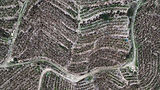
Impact & Benefits
Early detection prevents widespread infection, reduces chemical usage, and protects crop yield and quality. Growers gain a proactive early-warning system that replaces guesswork with hard data, allowing preventive action instead of reactive treatment. This approach increases farm efficiency, lowers operational costs, and builds long-term resilience against climate-driven disease cycles.


